
When you understand how children's skin works, AMIO makes sense.
A scientifically proven guide to making conscious decisions about children's skin.
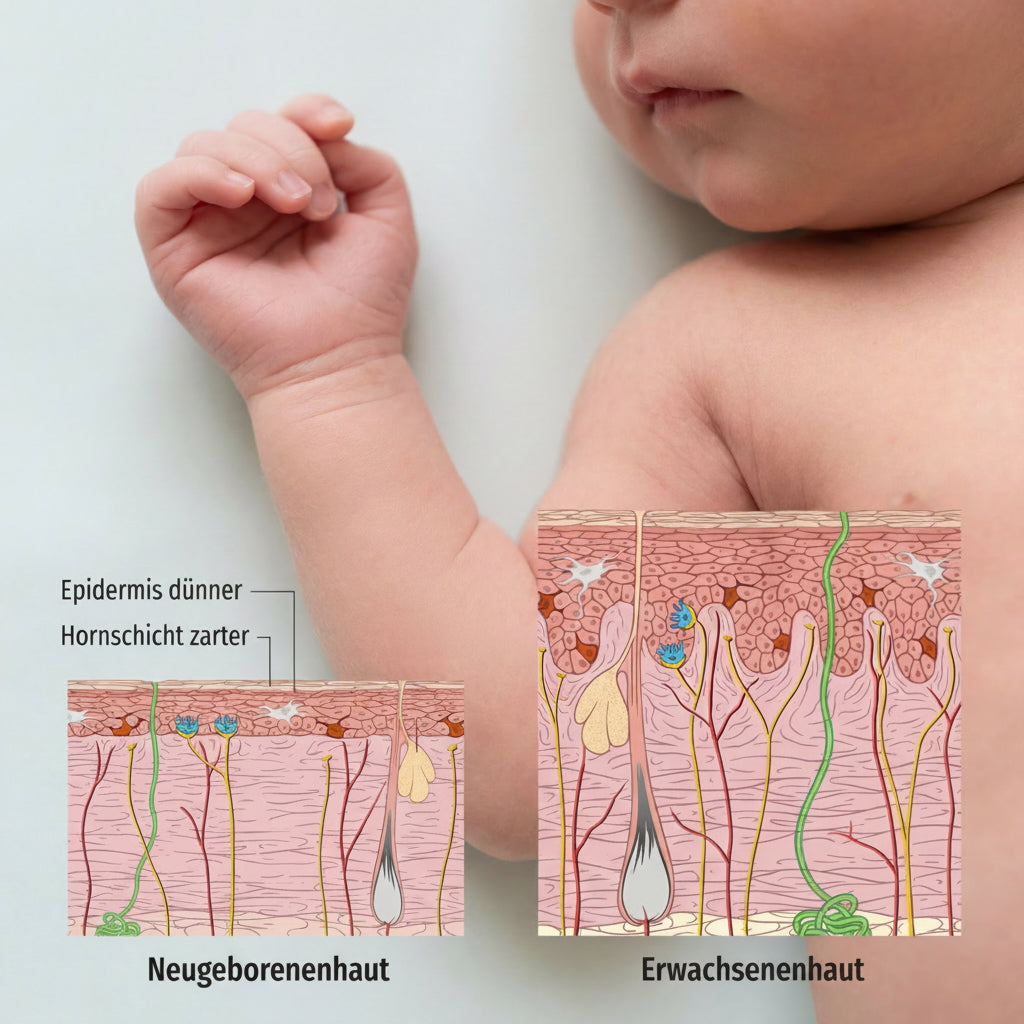
1. Thinner skin¹ & still immature skin barrier²
A baby's skin is finer and significantly thinner than an adult's. Its outer protective layer is not yet fully developed and is less able to defend against external influences. At the same time, children's skin loses moisture more quickly and reacts more sensitively to its environment.
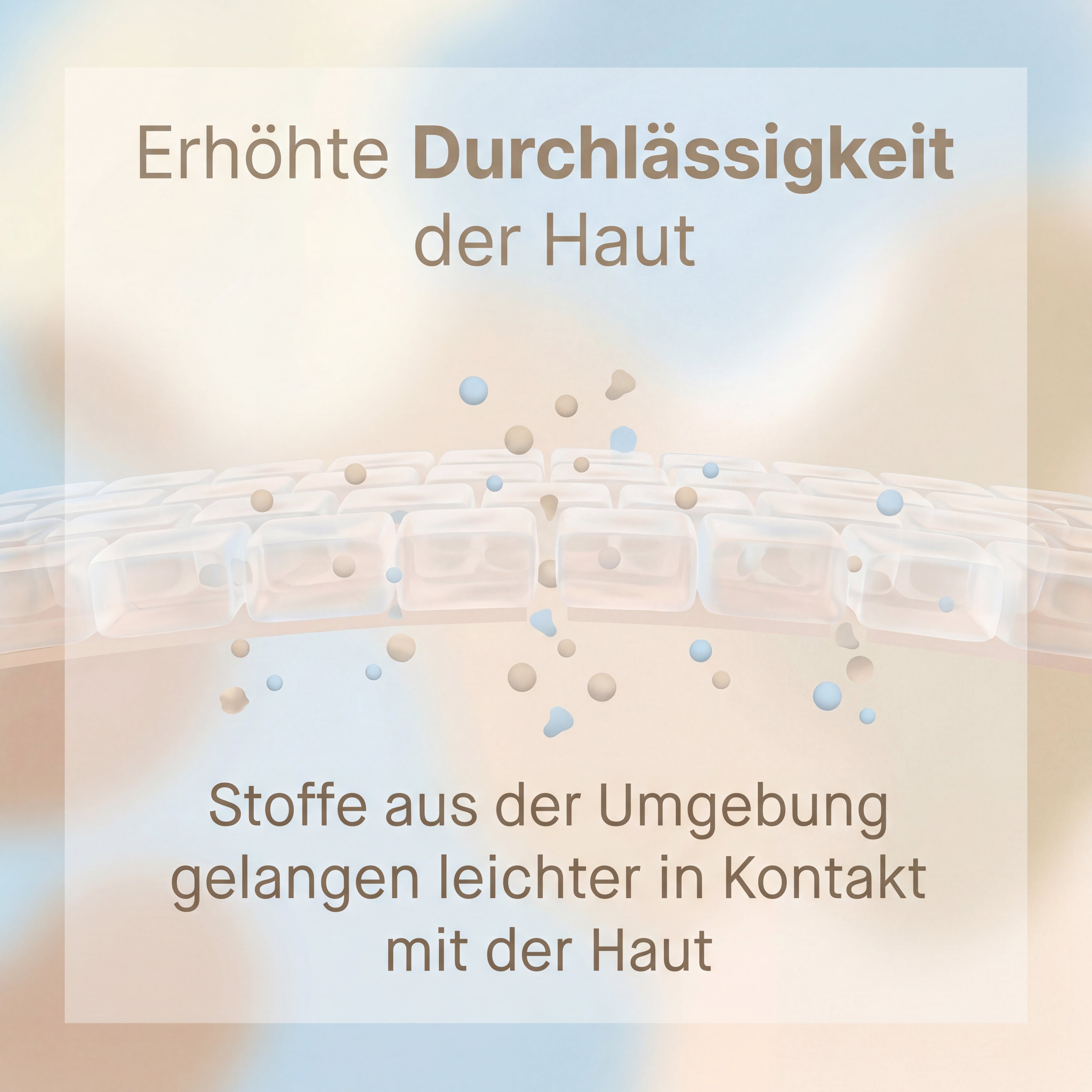
2. Increased skin permeability³
Because a baby's natural skin barrier is still developing, it can absorb substances from its environment more easily. Residues from textiles can therefore come into contact with the skin more quickly – especially with prolonged wear.
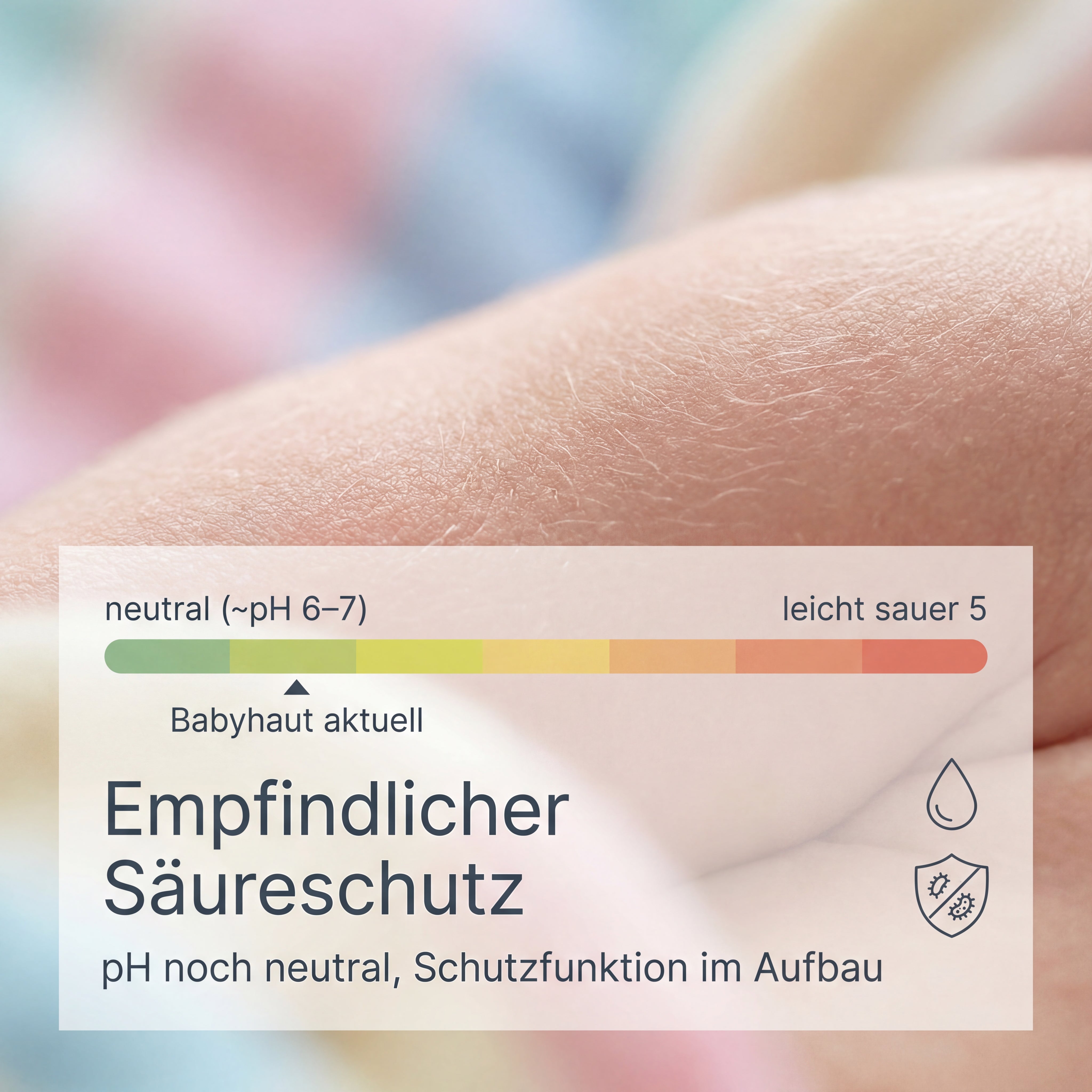
3. Immature skin pH & increased susceptibility to irritation⁴
The skin's natural acid mantle, which helps to ward off irritants and microorganisms in adults, is not yet fully stable in newborns. As a result, children's skin is more sensitive to friction, moisture, and unsuitable materials.
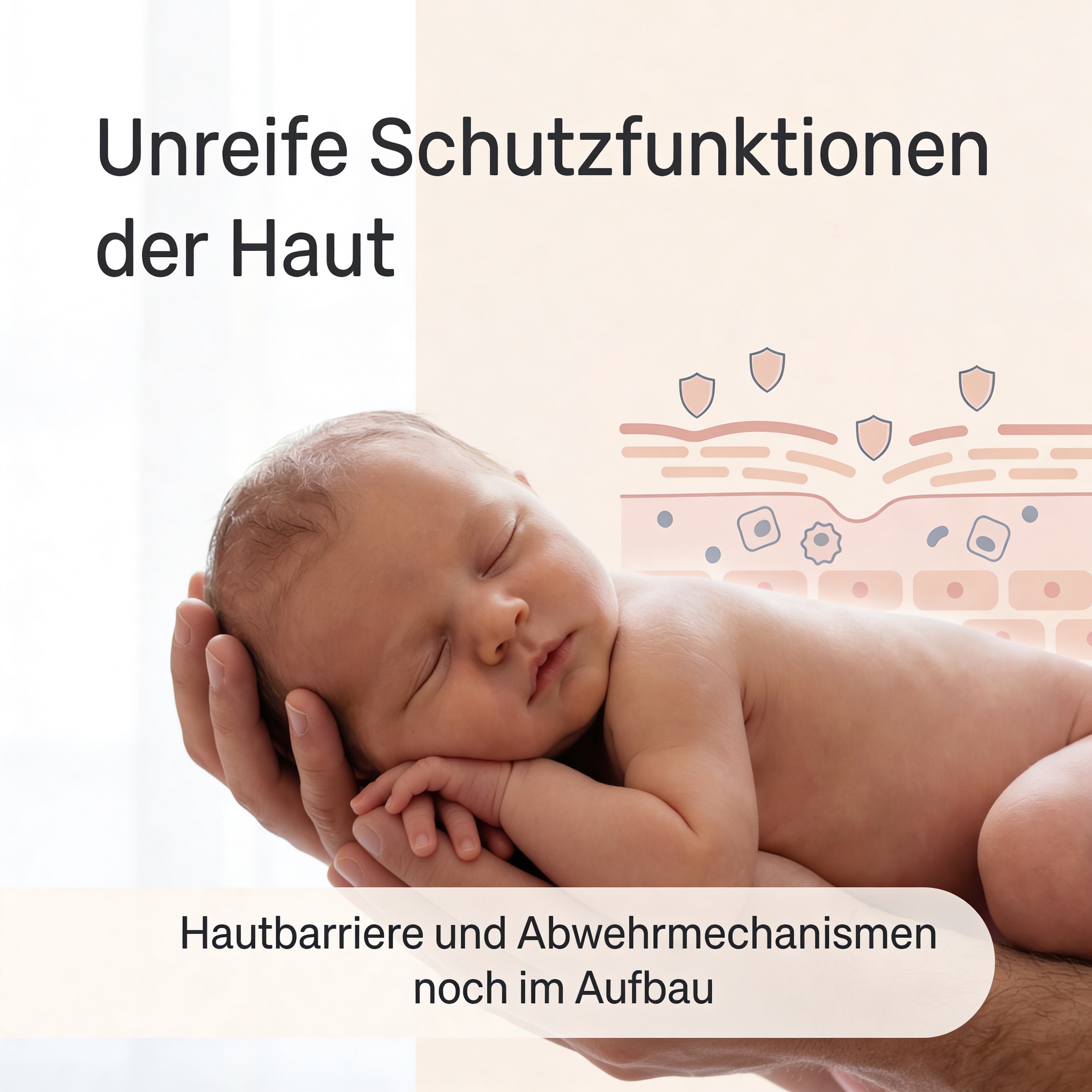
4. Immature protective functions of the skin⁵
The protective and defensive functions of a baby's skin are still developing. External influences can therefore be more easily irritating – especially in the first few months of life. This makes it all the more important to provide an environment that supports the skin rather than further stressing it.

Current medical sources
¹ Agnieszka A. Garncarczyk: Structure of children's skin and rules for its care — Epidermis is up to ~20% thinner in infants; stratum corneum is significantly more delicate.
² The Importance of Skincare for Neonates and Infants: An Algorithm – Journal of Drugs in Dermatology (2021) – She explicitly states that the outer protective layer (stratum corneum and suprapapillary epidermis) has low resistance in infants.
³ Infant Skin Barrier, Structure, and Enzymatic Activity… — higher values for transepidermal water loss (TEWL) and skin conductance in infants compared to adults.
⁴ Infant epidermal skin physiology… — Skin acidity (pH) develops during the first few weeks after birth.
⁵ Skin Barrier Function in Neonates and Infants – Review shows that the skin barrier in newborns and infants is functionally less developed, making it more susceptible to irritation and dehydration.
1. Thinner skin¹ & still immature skin barrier²
A baby's skin is finer and significantly thinner than an adult's. Its outer protective layer is not yet fully developed and is less able to defend against external influences. At the same time, children's skin loses moisture more quickly and reacts more sensitively to its environment.
2. Increased skin permeability³
Because a baby's natural skin barrier is still developing, it can absorb substances from its environment more easily. Residues from textiles can therefore come into contact with the skin more quickly – especially with prolonged wear.
3. Immature skin pH & increased susceptibility to irritation⁴
The skin's natural acid mantle, which helps to ward off irritants and microorganisms in adults, is not yet fully stable in newborns. As a result, children's skin is more sensitive to friction, moisture, and unsuitable materials.
4. Immature protective functions of the skin⁵
The protective and defensive functions of a baby's skin are still developing. External influences can therefore be more easily irritating – especially in the first few months of life. This makes it all the more important to provide an environment that supports the skin rather than further stressing it.
Current medical sources
¹ Agnieszka A. Garncarczyk: Structure of children's skin and rules for its care — Epidermis is up to ~20% thinner in infants; stratum corneum is significantly more delicate.
² The Importance of Skincare for Neonates and Infants: An Algorithm – Journal of Drugs in Dermatology (2021) – She explicitly states that the outer protective layer (stratum corneum and suprapapillary epidermis) has low resistance in infants.
³ Infant Skin Barrier, Structure, and Enzymatic Activity… — higher values for transepidermal water loss (TEWL) and skin conductance in infants compared to adults.
⁴ Infant epidermal skin physiology… — Skin acidity (pH) develops during the first few weeks after birth.
⁵ Skin Barrier Function in Neonates and Infants – Review shows that the skin barrier in newborns and infants is functionally less developed, making it more susceptible to irritation and dehydration.

Dermatological Recommendation from Practice
Dr. Miriam Rehbein, a dermatologist and mother of four from Munich, on the effects of textiles on baby and children's skin.

The findings show:
Textiles worn directly on the skin require careful selection for babies and children.
This is exactly where AMIO comes in: Our underwear is made from carefully selected, skin-friendly materials that take natural development into account, support it and thus give parents peace of mind.
Discover our materials now.


